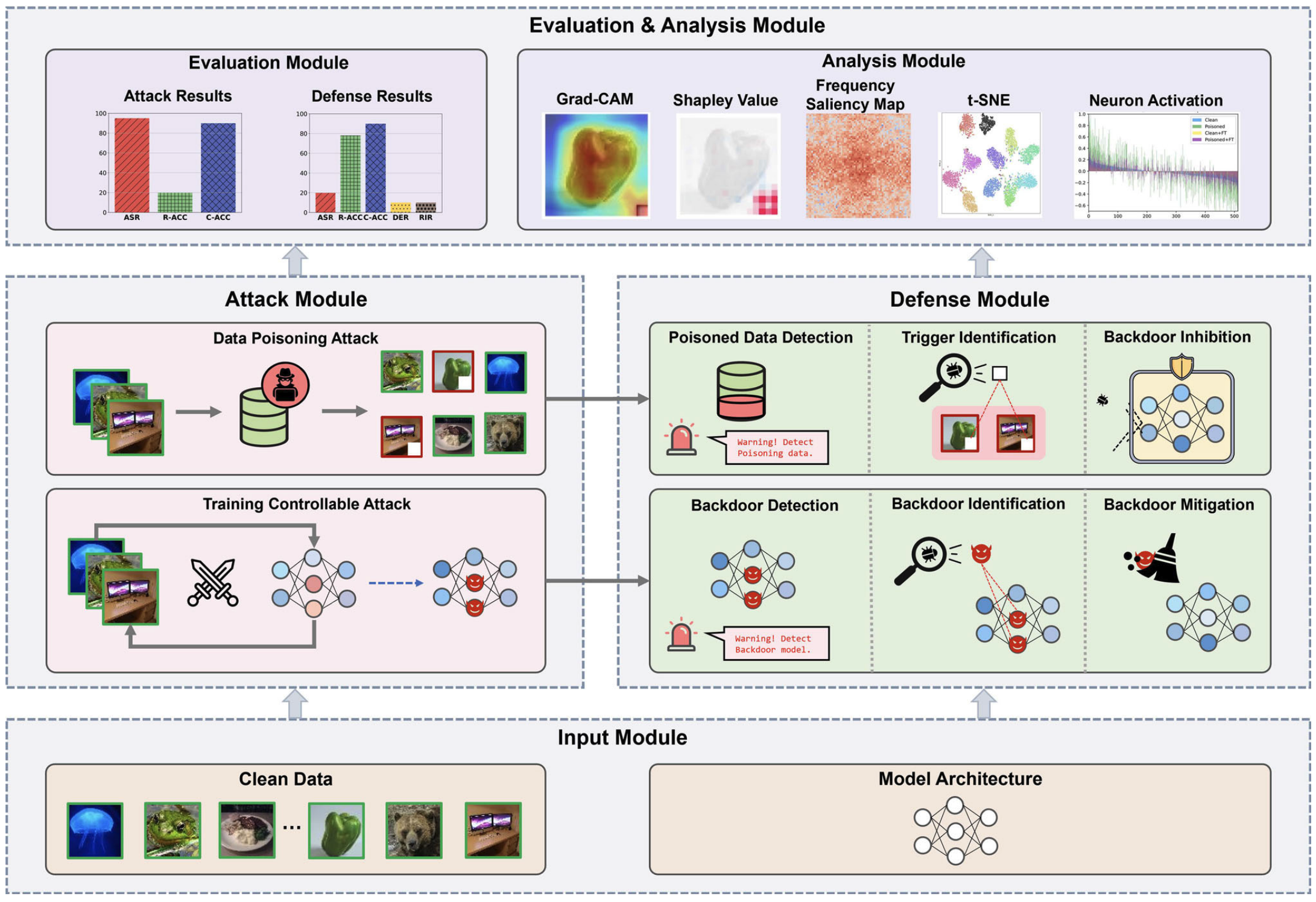
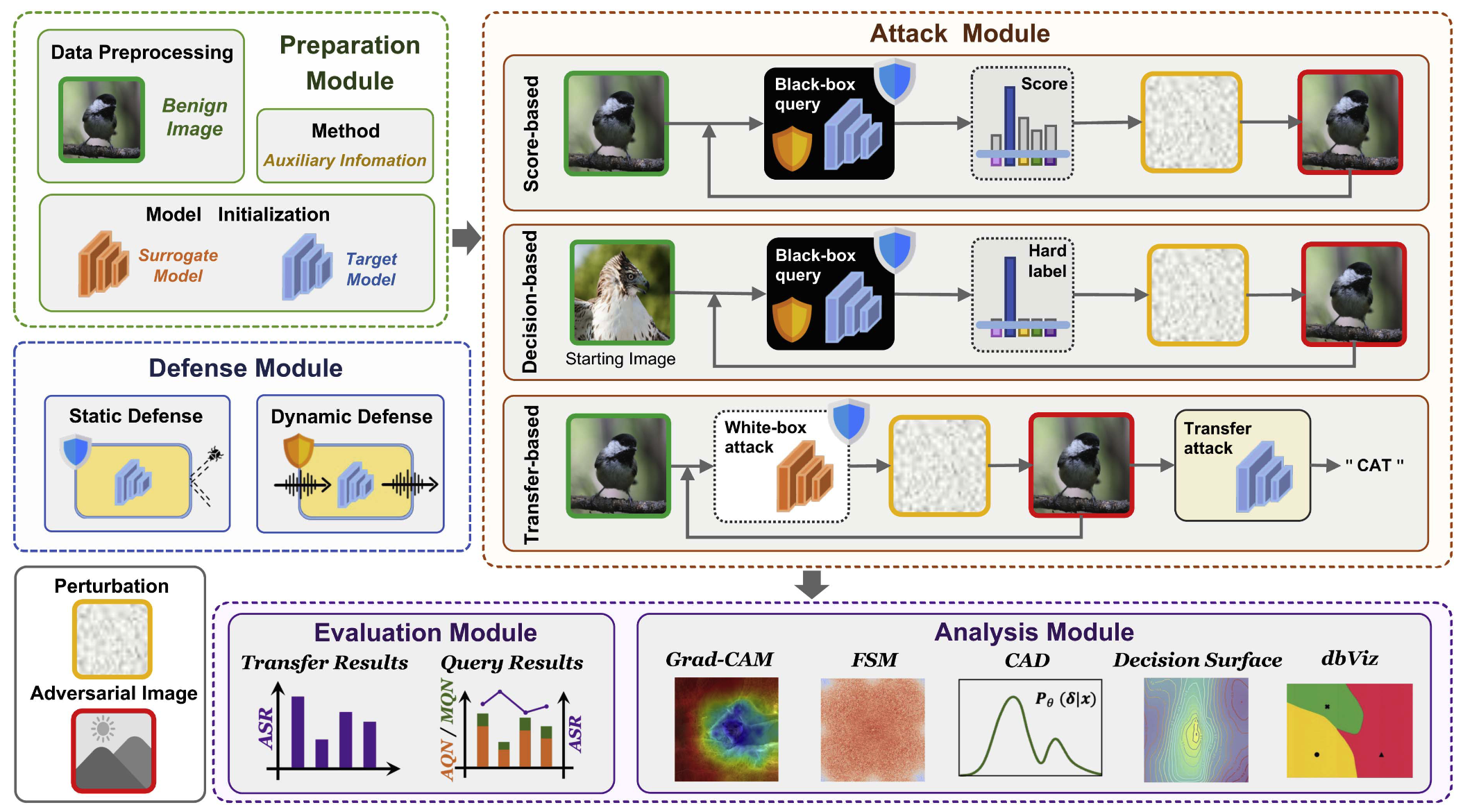
Adversarial machine learning (AML) investigates vulnerabilities that cause machine learning systems to produce predictions deviating from human expectations. We unify the landscape of attacks and defenses through a lifecycle-aware perspective spanning pre-training, training, post-training, deployment, and inference. On the attack side, we synthesize three primary paradigms—backdoor attacks (arising through data poisoning or training control, activated at inference), weight attacks (injected post-training or at deployment via bit-flips), and adversarial examples (crafted at inference)—and clarify their connections and differences across stages. On the defense side, we present a coherent taxonomy aligned to the same lifecycle: pre-training (robust model architectures; poisoned data detection), training (adversarial training; secure centralized and decentralized training), post-training (backdoor detection, target-class detection, and mitigation/removal), deployment (model enhancement and fingerprint verification against weight attacks), and inference (poisoned-query detection, robust prediction, adversarial-query/sequence detection, and randomized/dynamic inference). To facilitate reproducible evaluation under this unified perspective, we further release two open-source benchmarks: BackdoorBench and BlackBoxBench that provide standardized datasets, protocols, and metrics mapped to the lifecycle stages, enabling apples-to-apples comparisons and stress-testing of cross-stage strategies.
These works bridge this gap through three key contributions: (1) offers formal, lifecycle-aware definitions of AML threats, (2) organizes both attack methodologies and stage-specific defenses into hierarchical taxonomies while elucidating inter-paradigm relationships, and (3) extends analysis to generative and multimodal models as well as beneficial applications.
Our findings emphasize that piecemeal, single-stage defenses are insufficient against coordinated, multi-stage attacks; instead, holistic, cross-stage strategies and lifecycle-aware monitoring are essential. We distill comparative insights and trade-offs (effectiveness, cost, clean-accuracy impact, scalability, generality, evasion difficulty), highlight practical considerations in safety-critical domains, and chart concrete research directions toward adaptive, automated, and comprehensive AML defenses.
@article{aml-attack-ijcv-2025,
  title={Attacks in Adversarial Machine Learning: A Systematic Survey from the Lifecycle Perspective},
  author={Wu, Baoyuan and Zhu, Zihao and Liu, Li and Liu, Qingshan and He, Zhaofeng and Lyu, Siwei},
  journal={IJCV},
  year={2025}
}

@article{aml-defense-ijcv-2025,
  title={Defenses in Adversarial Machine Learning: A Systematic Survey from the Lifecycle Perspective},
  author={Wu, Baoyuan and Zhu, Mingli and Zheng, Meixi and Zhu, Zihao and Wei, Shaokui and Zhang, Mingda and Chen, Hongrui and Yuan, Danni and Liu, Li and Liu, Qingshan},
  journal={TPAMI},
  year={2025}
}

@article{zheng2025blackboxbench,
  title={Blackboxbench: A comprehensive benchmark of black-box adversarial attacks},
  author={Zheng, Meixi and Yan, Xuanchen and Zhu, Zihao and Chen, Hongrui and Wu, Baoyuan},
  journal={TPAMI},
  year={2025}
}

@article{wu2025backdoorbench,
  title={Backdoorbench: A comprehensive benchmark and analysis of backdoor learning},
  author={Wu, Baoyuan and Chen, Hongrui and Zhang, Mingda and Zhu, Zihao and Wei, Shaokui and Yuan, Danni and Zhu, Mingli and Wang, Ruotong and Liu, Li and Shen, Chao},
  journal={IJCV},
  year={2025}
}